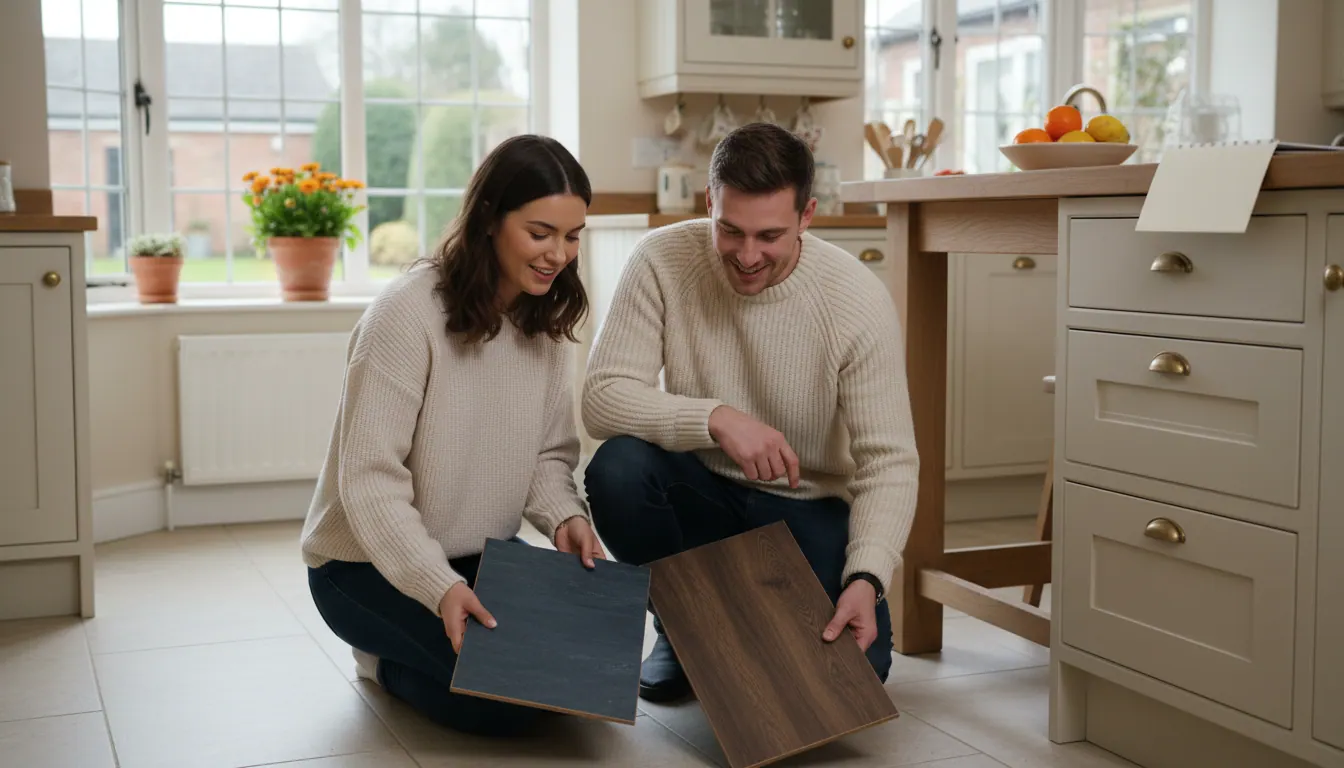
Carpet or LVT for a busy kitchen: which wears better?
Choosing between carpet or LVT for your kitchen in Derby? We explain the real pros and cons so you can pick the right flooring with confidence.
Carpet or LVT in the kitchen: which one actually works?
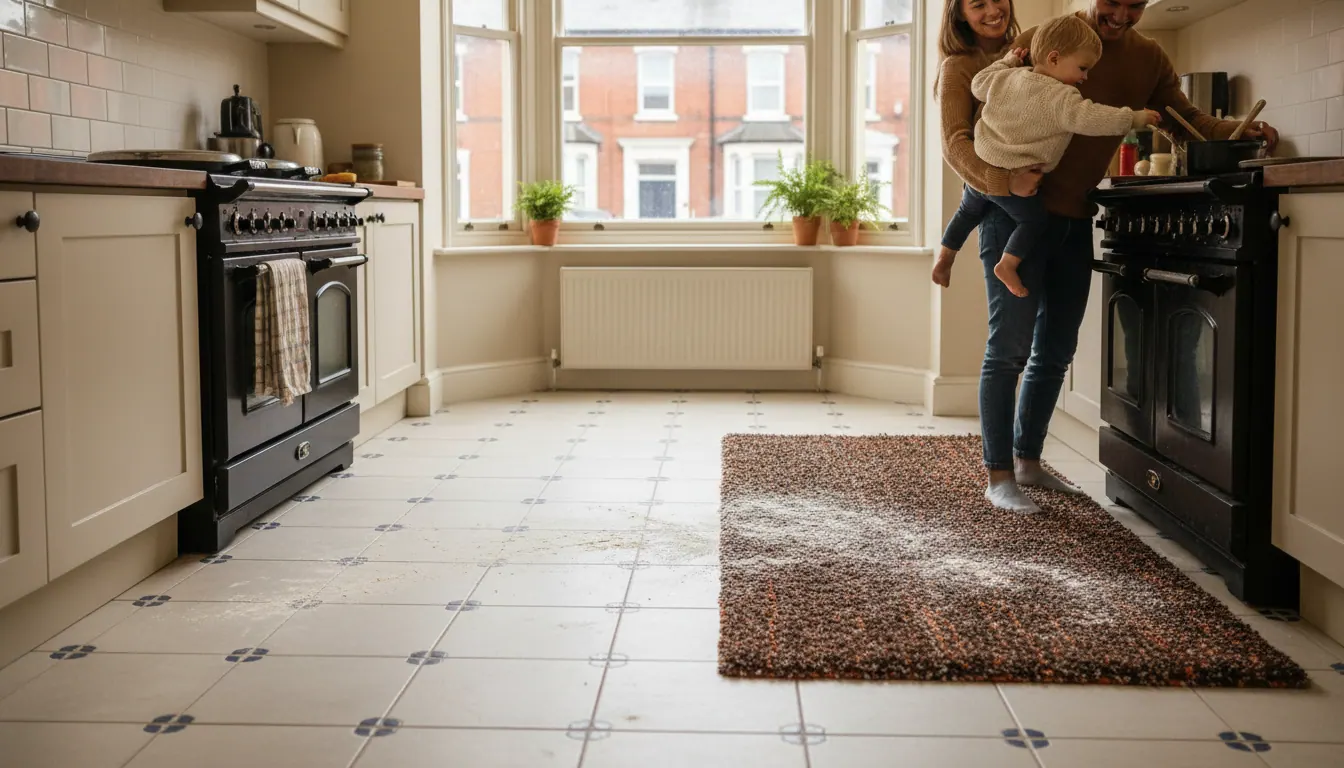
Kitchens take a battering. Spills, foot traffic, dropped pans, muddy shoes from the back door. The floor you choose has to cope with all of that while still looking good. So when people in Derby wonder whether to go for carpet or LVT in the kitchen, the honest answer is: it depends on how you use the space, but for most kitchens, LVT is the stronger choice.
That said, there is no single right answer for every home. Here is how we would think it through.
Why most people choose LVT for kitchens
LVT stands for luxury vinyl tile. It is a hard-surface flooring made up of layers, giving it a realistic stone or wood look with a surface that handles moisture far better than carpet.
In a kitchen, the practical case for LVT is straightforward:
- Spills sit on the surface rather than soaking in
- It wipes clean quickly, which matters when you are cooking every day
- It copes well with everyday use around chairs and stools
- It gives a clean, finished look that works with most kitchen styles
We recently supplied and fitted Universal LVT in the colour Fawn to a kitchen and dining room. A layout like that is where LVT earns its keep: one continuous floor that looks cohesive and cleans up in one go.
If your kitchen flows into a dining area, LVT is especially worth considering. You get a consistent look across both rooms, and you do not have to worry about the junction between two different floor types.
Is vinyl flooring actually good for a kitchen?
This is one of the most common questions, and the short answer is yes, LVT is well suited to kitchens.
The longer answer: not all vinyl is the same. Vinyl sheet (a single roll of material) and LVT (individual tiles or planks) are both vinyl-based, but LVT tends to be thicker, more stable underfoot, and better looking. When people ask about vinyl flooring for their kitchen, LVT is usually what they are really after.
LVT gives you the practical benefits of a hard, easy-clean surface alongside a look that does not feel clinical or dated. LVT ranges come in a wide variety of colours and finishes, so you have real choice when it comes to matching your kitchen units or worktops.
So when would carpet work in a kitchen?
Honestly, carpet is rarely the right fit for a kitchen. The main reasons:
- Food and drink spills are much harder to deal with on carpet
- Steam and humidity over time can cause problems
- Grease from cooking can work its way into fibres
That said, if your kitchen is very small and connects directly to a living space that you are carpeting, some homeowners do carry carpet through. We would always be straightforward with you about whether that is a sensible idea for your particular layout. Our job is to help you make the right call, not just to sell you something.
For rooms where carpet genuinely excels, think bedrooms, lounges, stairs and hallways. Those are the spaces where carpet's warmth and softness make a real difference to how a room feels.
What about the dining room?
The dining room sits in interesting territory. It is not a kitchen, but it shares some of the same risks: food, drinks and chair legs scraping back and forth.
LVT handles all of that well. It is also much easier to clean under a dining table than carpet is. If you have children or regularly entertain, that practicality is hard to argue with.
Some people do choose carpet in a dining room, usually for warmth and sound absorption. If your dining room is separate from the kitchen and used more as a formal space, carpet can work. But if it opens into the kitchen or gets heavy daily use, LVT tends to hold up better over time.
Choosing the right LVT colour for a kitchen
Colour choice matters more than people often realise. A kitchen gets a lot of natural light in some homes and very little in others, and the right LVT shade can make the room feel bigger or cosier depending on what you are after.
A few practical pointers:
- Lighter, neutral tones (such as warm stone or sandy shades) work well in smaller kitchens or rooms with limited natural light. They reflect light and make the space feel open.
- Darker tones can look striking in a well-lit kitchen but may make a smaller room feel enclosed.
- Mid-toned naturals are often the safest choice if you are unsure, because they sit comfortably with most unit colours and do not show every mark.
If you are unsure what colour would work in your specific kitchen, give us a ring and we are happy to talk it through.
Carpet for the rest of the house: where it shines
Choosing LVT for the kitchen does not mean carpet is off the table for the rest of your home. Quite the opposite. Many homeowners mix the two: LVT in the kitchen and dining room, carpet on the stairs, landing and bedrooms.
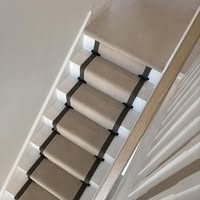
Carpet brings real warmth to a bedroom. Underfoot in the morning, the softness makes a difference. On stairs, carpet also provides grip and reduces noise, which matters in a busy household.
If you are re-flooring several rooms at once, we supply and fit both carpet and LVT. It is worth thinking about how the two meet at doorways so the transition looks intentional rather than awkward.
Preparing for new kitchen flooring
You do not need to do anything complicated beforehand, but a few things help:
- Clear the room as much as you can. Appliances, small items and anything stored on the floor are easier to deal with out of the way.
- Think about what is already down. If you have existing flooring, mention what it is when you call so we can talk it through.
- Have a rough idea of the room size. You do not need to be precise, but a general sense helps make a first conversation more useful.
Frequently asked questions
Is LVT flooring a good choice for a kitchen?
Yes, for most kitchens LVT is a strong choice. It handles moisture and everyday spills well, cleans up easily and looks smart. For a busy kitchen it is usually the flooring we would suggest first.
What is LVT flooring, exactly?
LVT stands for luxury vinyl tile. It is a multi-layer flooring product designed to mimic the look of stone or wood, with a hard-wearing surface layer that makes it practical for high-use rooms. It is not the same as older-style vinyl sheet flooring, and it is available in a wide range of realistic finishes.
Is there anything better than LVT for a kitchen floor?
That depends on what you mean by better. Some people prefer ceramic or porcelain tiles in a kitchen, but we do not supply or fit those. What we can say is that LVT offers a very strong balance of practicality and appearance for most kitchens, and it is more comfortable underfoot than hard stone tiles. For most kitchens it does the job very well.
Can I have carpet in my kitchen if I really want it?
You can, but we would be honest with you about the drawbacks. Kitchens produce moisture, grease and spills, all of which are hard on carpet fibres, so carpet in a kitchen can wear or become hard to keep fresh sooner than it would in other rooms. Our advice would be to save carpet for the rooms where it genuinely performs, like bedrooms, stairs and living rooms, and to use LVT where the kitchen demands something tougher.
Still not sure? Let's talk it through
Choosing between carpet or LVT for your kitchen does not have to be complicated. We supply and fit both carpet and LVT in Derby, and we are happy to give you a straight opinion based on your room and how you use it.
No hard sell. Just practical advice.
Give us a call on 07306 114151 or get in touch with us here and we will help you figure out what works best for your home.