Choosing carpet colour for a north-facing bedroom: light and warmth
Choosing carpet colour for a north-facing room in Derby? We share practical, light-aware advice to help you pick a shade that feels warm and bright.
North-facing rooms need a little more thought
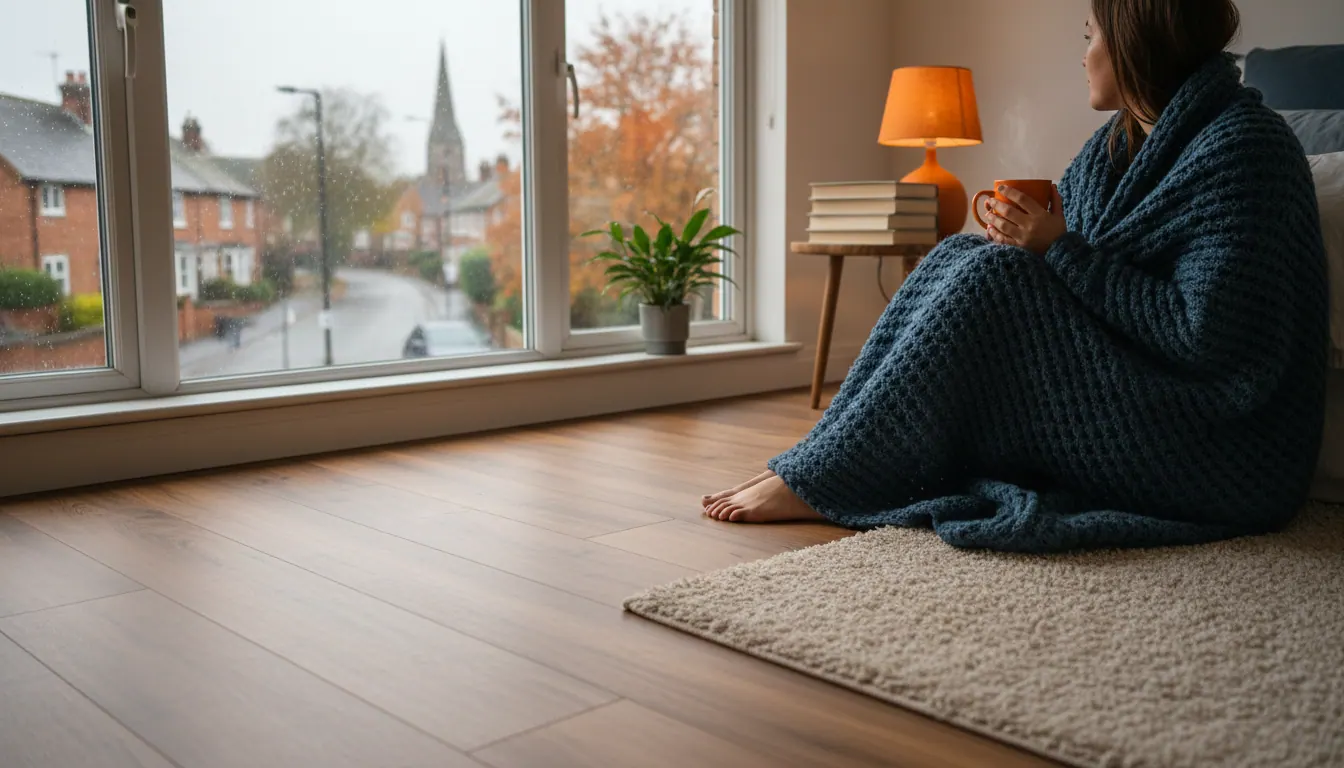
A north-facing room never gets direct sunlight. The light that comes in is reflected, cooler and often bluish in tone, and it stays that way throughout the day. That changes everything when you are choosing a carpet colour.
What looks like a warm, sandy beige on a sample card can pull noticeably grey or even slightly purple once it is laid in a room where the light has a cool cast. And a carpet that looks fine in the shop, under artificial lighting, can feel flat and cold once it is fitted. This is one of the most common carpet colour mistakes, and it is almost entirely avoidable with a bit of preparation.
If you are planning new carpet for a north-facing bedroom, hallway or living room in Derby, here is what is worth knowing.
Why the light direction matters so much
Natural light from the north has a higher colour temperature. In practical terms, that means it leans blue or grey rather than golden. Colours with cool undertones, things like lavender-grey, blue-grey or stark white, can become even cooler in this kind of light. They do not necessarily look bad, but they can make a room feel chilly and a little unwelcoming, especially in a bedroom or a main living space.
The good news is that once you understand this, you can work with it rather than against it.
The best carpet colours for a north-facing room
Warm neutrals: your safest starting point
Warm neutrals are the go-to choice for rooms with a cool light bias. Think creams with a yellow or pink base, soft taupes, warm sandy tones and earthy biscuit shades. These work because their warm undertones counterbalance the bluish light rather than amplifying it.
A colour like a golden oat or a soft caramel will look grounded and inviting in a north-facing space. It will not fight the light; it will simply feel warmer than the room's natural cast.
The same logic applies to other flooring. We recently supplied and fitted Universal LVT in the colour Fawn to a kitchen and dining room, and warm, sandy neutral names like that are a good place to start when a room's light runs cool.
Mid-toned earthy shades
If you want more depth and character, mid-toned earthy shades such as warm terracotta, soft rust, dusty rose or muted olive can work very well. They bring warmth without making a smaller room feel closed in.
Deeper, richer tones
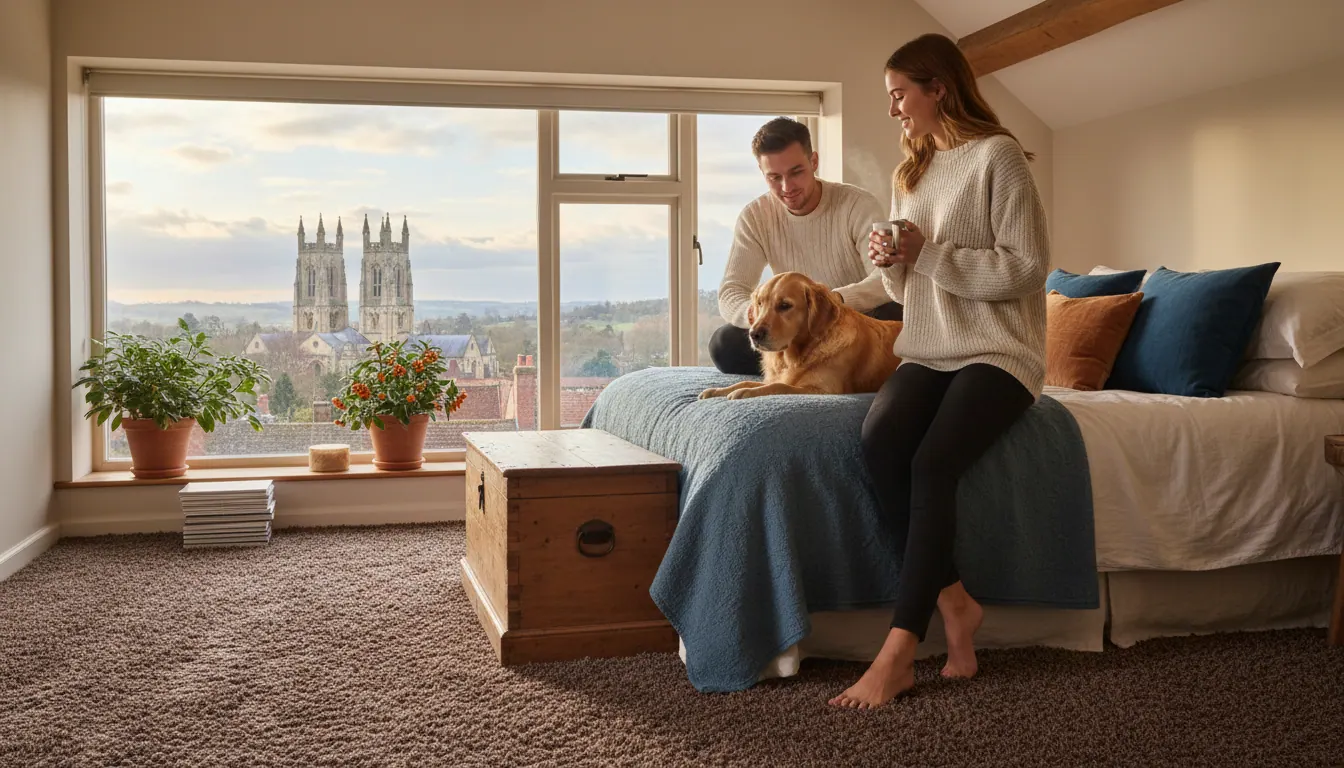
Darker carpets can absolutely work in north-facing rooms, and there is a case to be made for leaning into the mood of the room rather than fighting it. A deep warm chocolate, a rich forest green or a dusky navy can feel cosy and intentional rather than gloomy, provided the rest of the room has enough contrast and lighter walls or furnishings to lift it.
The key is that even your darker shades should have warm undertones. A cool charcoal or a blue-toned dark grey will reinforce the coldness of a north-facing room rather than adding warmth.
Undertones: the detail that makes or breaks it
This is the bit most people miss. Two carpets that look almost identical on a sample board can feel completely different once laid, because one has warm undertones (yellow, red, orange) and the other has cool ones (blue, green, purple).
In a north-facing room, you want to avoid cool undertones wherever possible. Watch out for:
- Greys with a blue or purple base
- Pure whites or off-whites that lean icy
- Greige shades that tip towards lavender in certain lights
- Pale tones with a green-grey cast
None of these are wrong as carpet colours in general. They simply do not flatter a north-facing room. The cool light will pick up and amplify those cool undertones, and the room will end up feeling colder than it actually is.
How to test a colour before you commit
Sample cards are a starting point, not a final answer. Here is a sensible way to approach it:
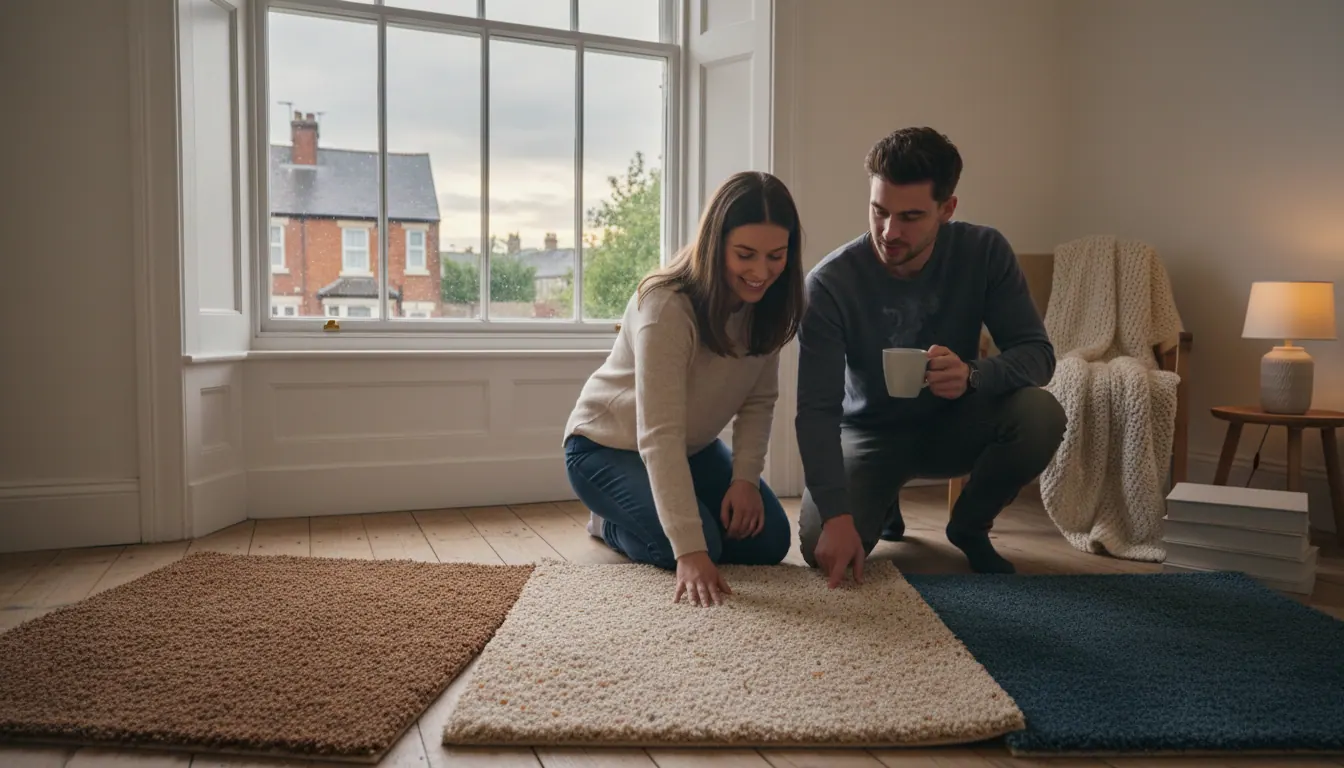
- Get a physical sample if you can and look at it at home.
- Place it on the floor in the actual room, not on a table or worktop.
- Look at it at different times of day, morning, afternoon and evening.
- Look at it with the lights on and off.
The colour you see at midday in a north-facing room can be noticeably different from the same colour at 7pm under artificial light. You are looking for a shade that holds its warmth across those different conditions.
It is also worth thinking about the walls. If you are painting the room at the same time, warm whites and soft off-whites will support your carpet choice. Cooler wall colours can work, but they need a warmer floor to balance them out.
Lighter or darker carpet: which is better for a north-facing room?
Neither is universally right. The more important factor is the undertone, as we have covered. But if you are weighing up lighter versus darker:
Lighter carpets reflect more of the available light back into the room, which can help a north-facing space feel bigger and brighter. The risk is that a very pale cool-toned carpet will look washed out and cold.
Darker carpets absorb light rather than reflecting it, which can make a room feel smaller. But a rich, warm dark tone can also feel snug and intentional, particularly in a bedroom.
For most north-facing rooms, a mid-tone warm neutral sits in the sweet spot. It is not so pale that it looks cold, and not so dark that it swallows the light entirely.
Carpet colour for north-facing stairs and hallways
Hallways and stairs are often poorly lit, and sometimes north-facing, especially where a hall runs front to back through a house. The same rules apply: warm undertones, mid-toned neutrals and earthy shades will all serve you well.
There is an added practical consideration here. Stairs and hallways take more wear than any other carpeted area in the home, so you want a colour that is also forgiving of everyday dirt and footfall. Mid-toned warm tones, particularly those in the beige, oat and taupe family, tend to hide everyday marks better than very pale or very dark options.
For more on choosing the right flooring for high-traffic areas, our article on Carpet or LVT for a busy kitchen: which wears better? covers the practical trade-offs in more detail.
Frequently asked questions
What is the best carpet colour for a north-facing room?
Warm neutrals work best. Creams, oats, taupes, sandy beiges and soft earthy tones all have warm undertones that counterbalance the cool, bluish light typical of a north-facing room. The key is to avoid colours with cool undertones, such as blue-grey or lavender-grey, which will make the room feel colder rather than warmer.
Is it better to have a lighter or darker carpet in a north-facing room?
The undertone matters more than the depth of colour. A lighter carpet with warm undertones will help reflect light and make the room feel brighter. A darker carpet with warm undertones can feel cosy and intentional. What to avoid is a cool-toned carpet at either end of the spectrum, as the north-facing light will amplify those cool undertones.
What undertones should I avoid in a north-facing room?
Avoid blue, purple and green undertones. These are most commonly found in cool greys, certain off-whites and some greige shades. In a north-facing room, the cool natural light will pick up and strengthen those undertones, making the space feel chilly and flat. Stick to carpets with yellow, red or orange bases, even subtly, and the room will feel noticeably warmer.
Ready to choose your carpet in Derby?
Getting the colour right is the part of the process that is hardest to do alone, because so much depends on your specific room, its light and its existing finishes. We are happy to talk through what you are working with.
We supply and fit carpets in Derby. Get in touch with us or give us a call on 07306 114151 for a straightforward conversation about your floor.