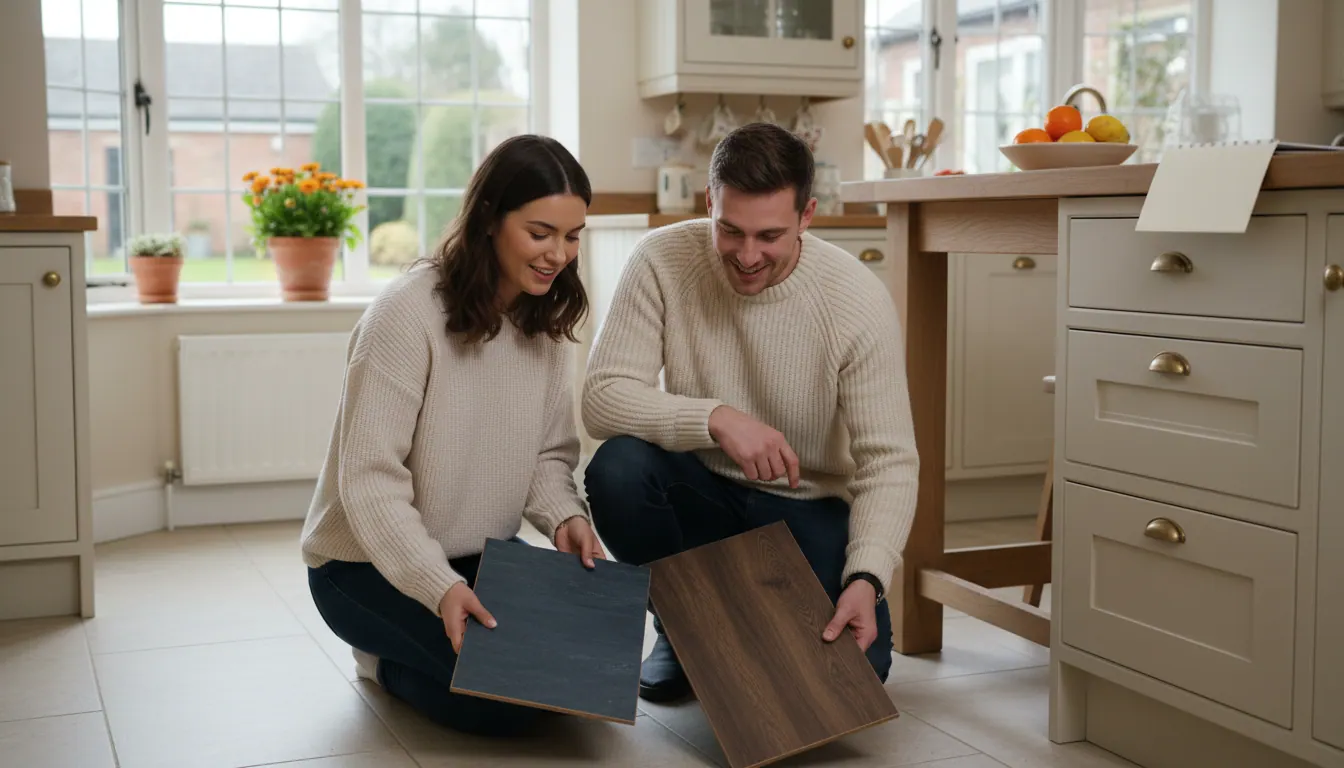
Getting your room ready for new carpet or LVT: a homeowner's guide
Getting a room ready for new flooring in Derby? Our practical guide covers every step, from clearing furniture to subfloor checks, for a perfect finish.
Getting your room ready for new flooring in Derby
A new floor can completely transform a room. But the fitting itself is only part of the job. What happens before the fitter arrives makes a real difference to how the finished floor looks and how long it lasts. We see it time and again on jobs across Derby and the surrounding area: a bit of careful preparation means the fitting goes smoothly, the result looks sharp, and there are no nasty surprises on the day.
This guide walks you through exactly what to do before we arrive, whatever type of flooring you are having fitted, whether that is carpet, LVT, laminate or vinyl.
Clear the room properly (and we mean properly)
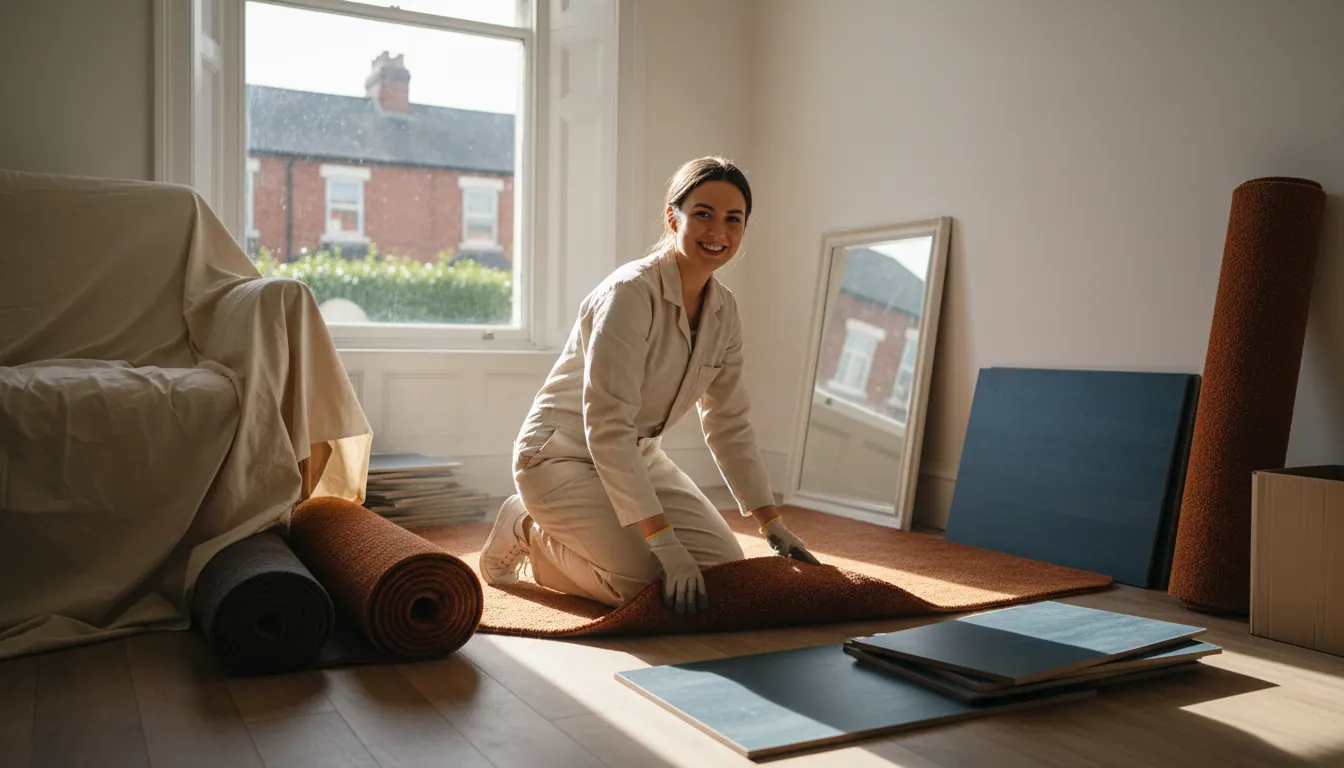
The single most important thing you can do is clear the room before your fitting day. That means furniture out, not just pushed to one side.
For carpet fitting, we need access to the full floor area to stretch and tack the carpet correctly. For LVT and laminate, the same applies. Trying to work around a sofa or a bed leads to joins in awkward places and a finish that does not look right.
A few practical tips:
- Move furniture to another room if possible, not just into the hallway.
- Take down any freestanding wardrobes or flat-pack units if they are staying in the room long-term. Fitting carpet or laminate underneath them is far better than fitting around them.
- Remove any existing rugs or floor coverings yourself if you can. It saves time on the day.
- Take doors off their hinges if they open into the room. New flooring adds height, and a door that drags across fresh carpet is a frustration nobody needs. We can advise on this when we visit.
Check the subfloor before anything goes down
This is one of the most overlooked steps, and it matters more than most people realise.
Whatever flooring goes on top, the subfloor underneath needs to be clean, dry and level. If it is not, you will see the problems through the new floor sooner or later.
For laminate and LVT, an uneven subfloor is a real issue. High spots cause boards to rock; low spots cause hollow sounds underfoot and can put stress on the locking joints over time. Walk the floor carefully. Feel for movement, soft spots or bounce. Any loose floorboards should be screwed down, not just nailed. Any significant dips or ridges may need a self-levelling compound before we can fit.
For carpet, the subfloor does not need to be quite as precise, but it still matters. Protruding nail heads should be knocked down or removed. Old gripper rods from a previous carpet need to come up if they are in the wrong position (we handle this as part of the fitting, but it is worth knowing).
For vinyl in bathrooms and en-suites, moisture is the main concern. Vinyl is a great choice for wet rooms precisely because it is water-resistant, but if the subfloor beneath it is damp, you will get problems. Check for any signs of damp or discolouration before we arrive.
Let materials acclimatise (this one really matters for laminate)
Laminate flooring is made partly from wood-based materials. Wood moves with changes in temperature and humidity. If you take laminate boards straight from a cold van and lay them on a warm floor, they can expand after fitting and cause the joints to buckle.
The fix is simple: let the boards sit in the room where they will be fitted for at least 48 hours before installation. Keep the room at normal living temperature. This allows the boards to adjust to the conditions in the room and reduces the risk of movement after fitting.
LVT and vinyl are less sensitive to this, but it is still good practice to let them settle in the room for 24 hours before fitting, especially in winter when the temperature difference between a delivery vehicle and a heated Derby home can be significant.
Carpet does not need acclimatising in the same way, but it should be stored flat or rolled correctly and not left in a damp garage or cold outhouse overnight.
Think about doorways and transitions between rooms
If you are having flooring fitted in more than one room, or going from one type of flooring to another (say, carpet upstairs and laminate downstairs), the transitions between rooms need a bit of thought.
For laminate running from a hallway into a room, the direction of the boards matters. Running them lengthways down the hallway and then into an adjoining room usually looks the most natural. We will advise on this when we see the layout, but it helps to think about it in advance so the whole flow of the floor makes sense.
Door thresholds and trims cover the join between two different floor types. We fit these as part of the job, but knowing in advance where the joins will be helps plan the layout properly.
What to do with skirting boards
Old carpet and flooring often hides the bottom edge of skirting boards. Once a new, thinner floor goes in, there can be a visible gap. On the other hand, if the new floor is thicker than the old one, it may sit tight against the skirting and look neat without any extra work.
For laminate and LVT, a small expansion gap is left around the perimeter of the room (this is normal and necessary). Beading or scotia trim covers this gap and gives a clean finish against the skirting. We fit this as part of the installation.
If you are planning to repaint skirting boards, do it before the new floor goes in. Much easier to paint without worrying about drips on a fresh floor.
What our customers say
We recently fitted carpet through nearly a whole house for a customer in Derby, and the job went smoothly partly because everything was ready when we arrived. That kind of preparation makes a real difference to the quality of the finish.
Here is what one of our customers had to say:
Highly recommend Coopers Carpets. Curtis fitted carpets in two rooms for us and did a fantastic job. Very professional, reliable and the quality of the work is excellent. We're really happy with the finished result and will definitely be using him again for another room.
Thanks again, Curtis!
A smooth fitting day starts well before we knock on the door. When the room is clear, the subfloor is sorted and the materials have had time to settle, everything just works better.
A note on pets and children on fitting day
Keep pets out of the room being fitted, ideally out of the house if possible. A curious dog or cat can be a real hazard around tools and materials, and it is stressful for the animal too.
Young children are best kept away from the fitting area for the same reasons. Fitting tools are sharp and the workspace changes quickly.
Frequently asked questions about preparing for new flooring
How do I prepare my floor for laminate flooring? Start by clearing the room completely of furniture and any existing floor coverings. Check the subfloor for loose boards, protruding fixings, dips or high spots, and address anything uneven. Let the laminate boards acclimatise in the room for at least 48 hours before fitting. Make sure the subfloor is clean and dry. We will handle the fitting itself, including laying the underlay, cutting the boards to size and fitting the edge trims.
What are the most common mistakes to avoid when laying laminate flooring? The biggest ones are: not letting the boards acclimatise, skipping the expansion gap around the room's perimeter, fitting over an uneven or damp subfloor, and not using the right underlay. These are all things that cause problems down the line, from buckling boards to hollow-sounding floors. Having a professional fit your laminate removes most of this risk.
Where should you start when laying laminate across multiple rooms? Generally, it makes sense to start from the most prominent room and work outward, keeping the boards running in a consistent direction. In a hallway leading into a living room, running the boards lengthways along the hallway and continuing into the room tends to look the most natural and creates a sense of flow. We assess the layout of your home before starting and plan accordingly.
Should I remove the old flooring myself before you arrive? You are welcome to, and it can save time on the day. If you are removing old carpet, take up the carpet and the underlay, and check whether the gripper rods need repositioning. If you are not comfortable doing this, just let us know and we can discuss it when we book the job. What really matters is that the subfloor is in good condition when we start.
Ready to get started in Derby?
If you are planning new flooring in Derby or the surrounding area and want to make sure everything is in order before the day, we are happy to talk it through. Whether it is carpet for the bedrooms, LVT for the kitchen or laminate through the hallway and living room, we will let you know exactly what to prepare.
You might also find these useful before you book: our guide to carpet for stairs and hallways and our article on LVT flooring for dining rooms if you are weighing up your options.
Give us a call on 07306 114151 or get in touch via our contact form and we will take it from there.
“Curtis was very helpful & visited several times bringing many samples. Because of complications I changed my plan & was unable to go ahead. I would certainly recommend him for his thorough support.”