LVT flooring for dining rooms: style, durability and easy cleaning
Thinking about LVT flooring for your dining room in Derby? We explain the real benefits, honest drawbacks and how to get a great result. Get in touch for a quote.
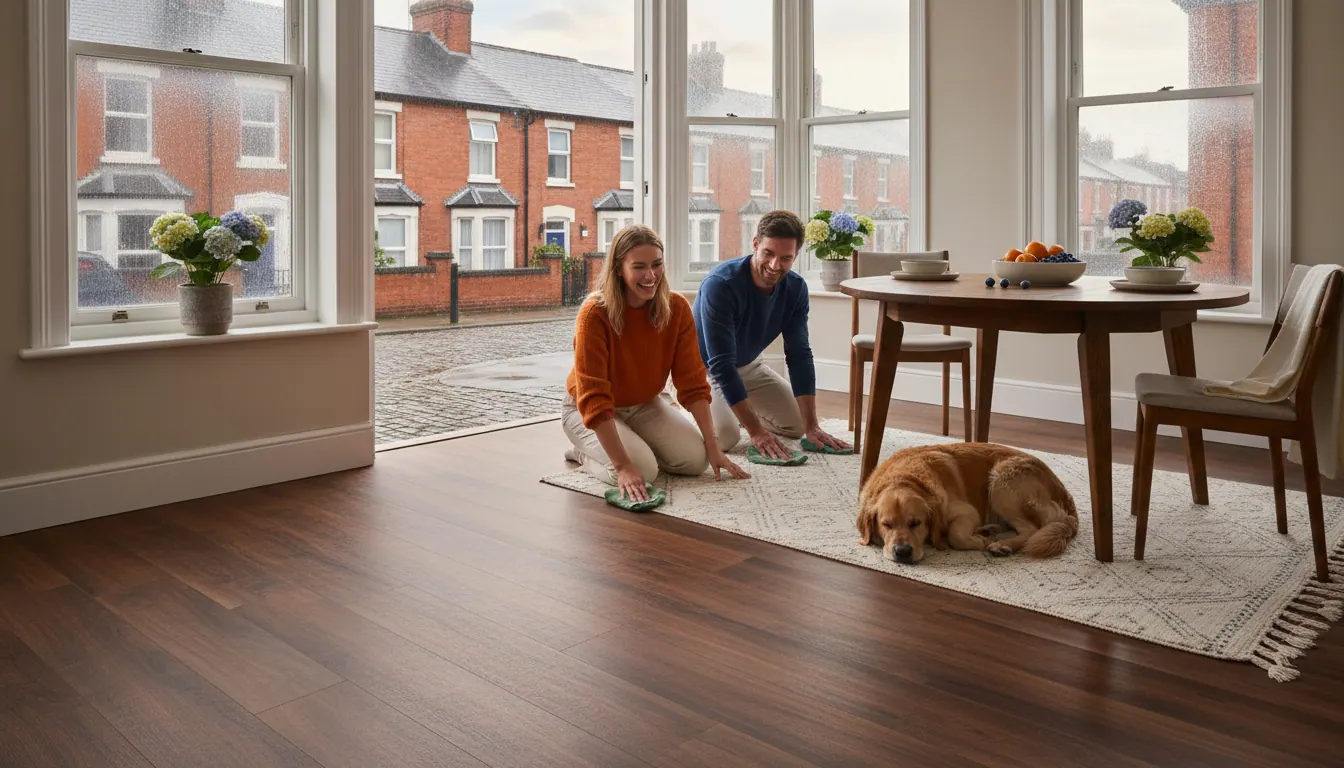
Why LVT flooring works so well in a dining room
Dining rooms take a beating. Chairs scrape back and forth every day, food and drinks get dropped, and if you have children or pets, the floor rarely gets a moment's rest. LVT flooring (luxury vinyl tile) handles all of that without complaint, which is why it is such a popular choice for family homes.
LVT is a multi-layer synthetic flooring. It has a rigid or semi-rigid core, a photographic design layer printed to look like wood, stone or tile, and a tough wear layer on top. That wear layer is what makes it so practical. It resists scratches, scuffs and surface moisture far better than most other floors, and it cleans up quickly after a spill.
Cooper's Carpets supplies and fits LVT in Derby and the surrounding area, including a recent kitchen and dining room finished in a warm fawn tone. Once it is down and properly finished, LVT looks smart and holds up well to daily family life.
The real benefits of LVT in a dining room
Let us be straightforward about what LVT actually offers, rather than just listing buzzwords.
It handles moisture and spills well. Dining rooms are spill-prone. LVT is water-resistant at the surface, so a knocked-over glass or a splash of sauce can be wiped clean without staining or warping the floor. This is a genuine, practical advantage over laminate, which can swell if moisture gets into the joints.
It is comfortable underfoot. LVT has a slight softness compared to ceramic tile or stone. That matters in a room where people stand up and sit down repeatedly and children often play on the floor.
It is quieter than hard tile. In a dining room that opens into a kitchen or living space, LVT deadens sound better than ceramic. Chairs moving, footsteps, toys being dragged across the floor. It all feels a little less harsh.
It looks the part. Modern LVT comes in realistic wood and stone finishes. Whether your home is a Victorian terrace, a 1970s semi or a newer build, there is a finish that will suit the space. Plank formats work especially well in dining rooms, giving the warmth of a wood look without the maintenance.
It is straightforward to keep clean. A regular sweep and a damp mop is all it takes. There are no grout lines to scrub, no wax to apply, and no specialist products needed.
If you are weighing up LVT against other options for a kitchen-diner, our article on carpet or LVT for a busy kitchen: which wears better? goes into more detail on both sides of that comparison.
The honest drawbacks of LVT flooring
It is important to be upfront here, because no flooring is perfect for every situation.
It can feel cold first thing in the morning. LVT does not retain heat the way carpet does. In a dining room that is not used until the evening, this matters less. But if your dining room doubles as a breakfast room or a homework space, it is worth knowing.
It can be damaged by heavy point loads. Furniture with narrow legs or castors can dent LVT if left in place for a long time. Felt pads under chair and table legs help, and most people fit them as a matter of course anyway.
The subfloor has to be right. This is probably the most important practical point. LVT will show up any unevenness in the subfloor beneath it. Lumps, dips or old adhesive ridges can telegraph through over time. Getting the subfloor clean, dry and level before fitting is not optional. It is what makes the difference between a floor that looks great and one that starts to look tired. A good fitter will always check the subfloor before starting.
It is not the same as solid wood. LVT mimics the look of wood convincingly, but it is not the real thing. If you want the character of genuine timber, that is a different product. What LVT gives you is the look with far less maintenance and much better resistance to moisture and everyday wear.
LVT dining room ideas: making it work in your space
The format and finish you choose will shape how the room feels.
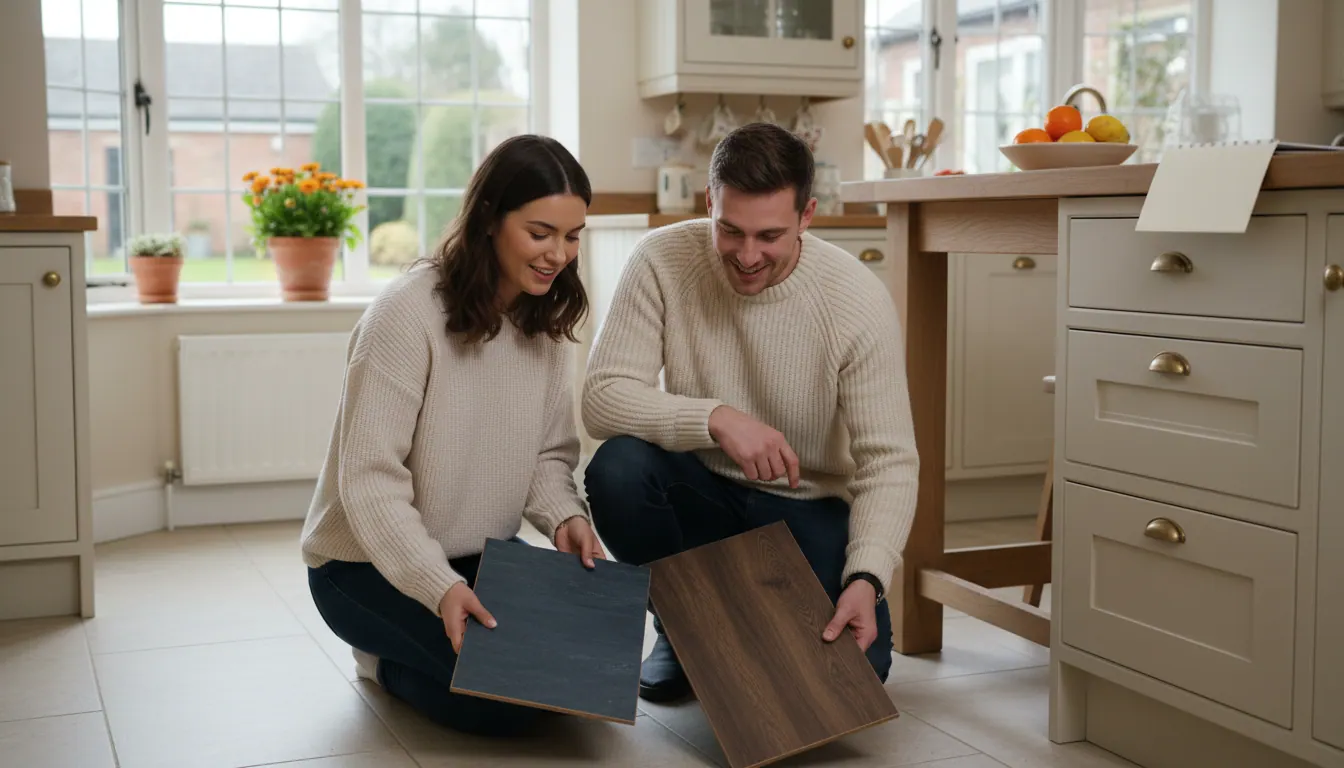
Plank formats are a popular choice in dining rooms. A longer, wider plank gives a clean, contemporary feel and suits open-plan kitchen-diners particularly well. Laying planks lengthways down the room makes the space feel longer.
Stone-effect tiles work well in more traditional dining rooms, especially where the space flows into a hallway or kitchen with a similar aesthetic. They give a grander feel without the cold hardness of real stone.
Herringbone patterns are a popular option, particularly in older properties where the pattern suits the character of the building. Some LVT ranges come in a herringbone-ready format, and the result can look genuinely striking.
Colour choices matter more than people often expect. Lighter tones open up a smaller dining room and reflect more light, which is especially useful in a north-facing space. Darker, warmer tones add richness and hide crumbs and pet hair better between cleans. Mid-tone natural wood shades are the most forgiving all-round.
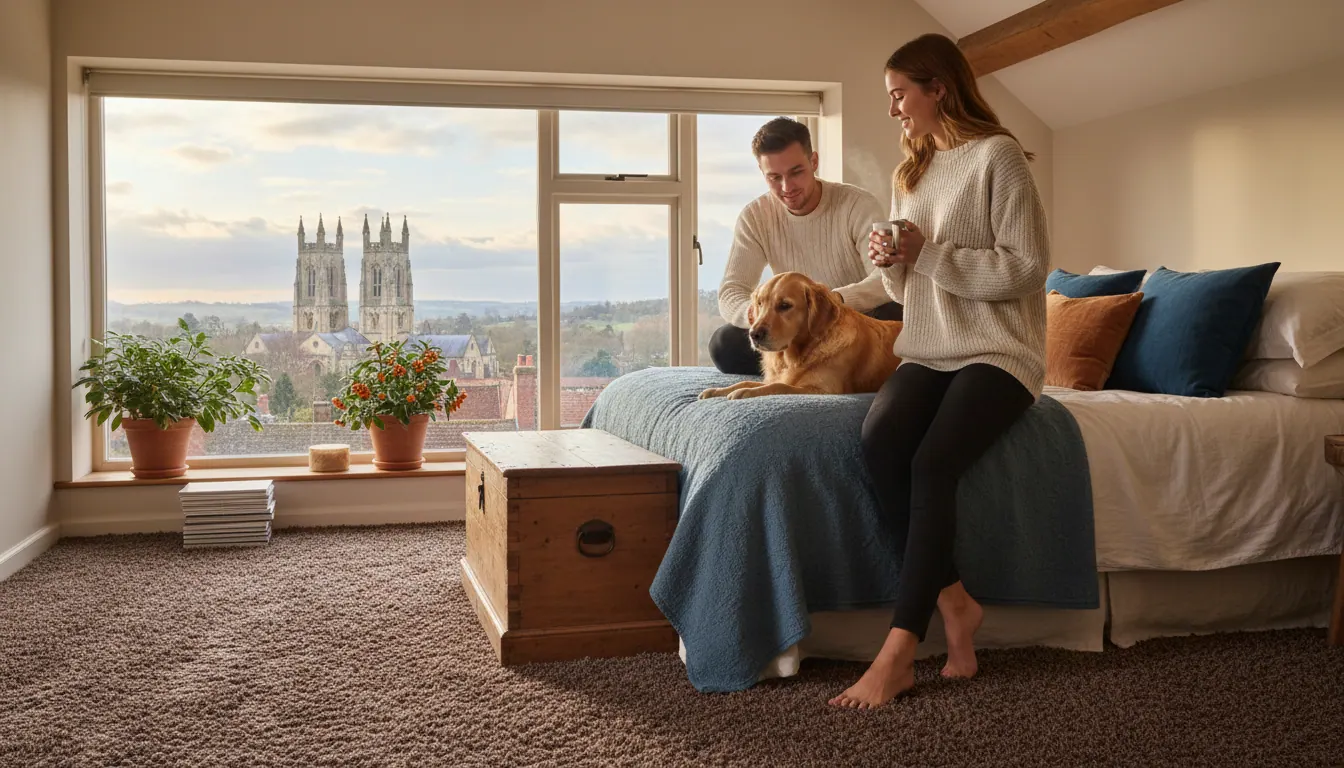
Many households mix floors: carpet upstairs, with LVT or laminate downstairs. It is a combination that makes real practical sense. Carpet in the bedrooms for warmth and comfort, hard flooring in the dining room, kitchen and living areas for easy cleaning and durability. If you are thinking along those lines, it is worth reading our guide to carpet for stairs and hallways: durability and safety to see how the two can work together.
What customers say about Curtis
Reviews of Cooper's Carpets on Facebook describe Curtis as professional, reliable and easy to deal with. Here is what one customer, who had carpet and vinyl flooring fitted, had to say:
Had two great experiences with Curtis now . We contacted Curtis on recommendation from two other family members and so glad we found him! He's professional, reliable and has great communication skills from start to finish . We've been really happy with the quality of carpet provided and fitting . We also had vinyl in an en-suite and again he did a great job! … onto the next room now !
Shannon Fletcher
That last line says it all, really. A good fitting job should make you want to do the next room too.
Preparing your dining room for LVT fitting
A little preparation makes a big difference to the finished result.
- Clear the room as much as possible before the fitter arrives. Furniture does not need to be completely removed, but the more space there is to work, the quicker and cleaner the job goes.
- Check the subfloor for any obvious dips, raised nails or old adhesive. Your fitter will assess it properly on the day, but flagging anything you have noticed in advance is helpful.
- Make sure the room is at a normal indoor temperature. LVT should be allowed to acclimatise to the room before it is laid, so if the space has been cold and unheated, it is worth warming it up beforehand.
- Think about the transition into adjoining rooms. Where LVT meets carpet, laminate or a different hard floor, a neat threshold strip finishes the job properly.
Frequently asked questions about LVT flooring in dining rooms
What is the current trend in flooring for dining rooms and kitchen-diners? LVT in plank format has become a go-to choice for open-plan dining spaces in recent years. Realistic wood-effect finishes in warm mid-tones are very popular, as are wider planks and herringbone layouts. Stone-effect LVT is also a good fit for more traditional properties.
What are the disadvantages of LVT flooring? The main ones are that it can feel cool underfoot compared to carpet, it can show dents from heavy furniture legs over time, and it relies on a good subfloor to look its best. It is also not the same as real wood if that is what you specifically want. That said, for a dining room, the advantages generally outweigh these points for most families.
Is LVT different from standard vinyl flooring? Yes. Standard vinyl is typically a single or double layer and is more flexible. LVT has a more rigid core, a thicker wear layer and a more convincing finish. It is more durable and better suited to high-traffic areas like dining rooms. Sheet vinyl is still a good option in some situations, particularly bathrooms and en-suites, but LVT is generally the stronger choice for a dining room.
Do I need underlay with LVT flooring? It depends on the product and the subfloor. Some LVT comes with an integrated backing layer. Others benefit from a thin underlay, particularly over concrete subfloors where a little extra cushioning and thermal insulation is useful. Your fitter can advise on what is right for your specific floor.
Ready to look at LVT for your dining room in Derby?
If you are thinking about new flooring for your dining room, or a kitchen-diner, we are happy to talk it through. Cooper's Carpets supplies and fits LVT in Derby and the surrounding area, and we will give you honest advice on whether it is the right choice for your room.
Give us a call on 07306 114151 or get in touch using our contact form and we will take it from there. No pressure, just a straightforward conversation about what will work best for your home.