Laminate flooring for living rooms and hallways in Derby homes
Thinking about laminate flooring for your living room in Derby? We explain what works, what to avoid and how to get it right first time.
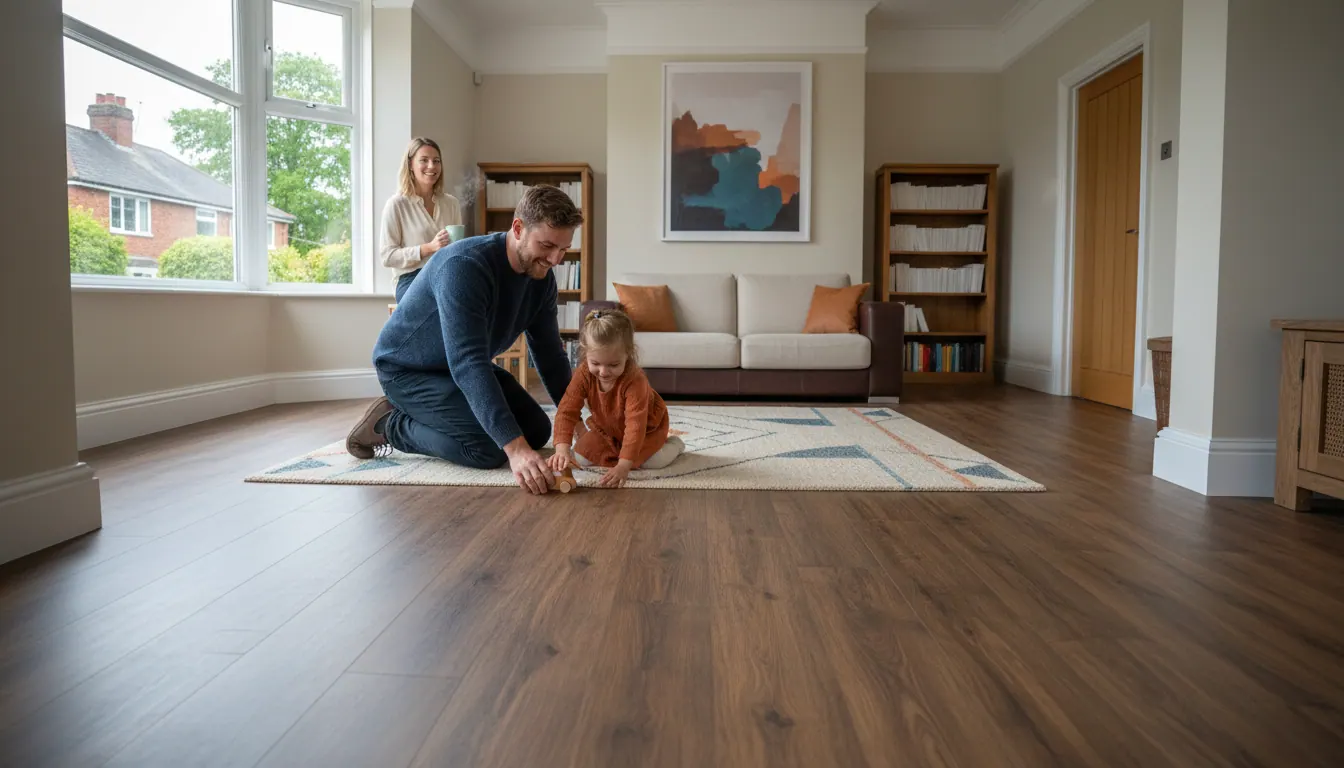
Laminate flooring in Derby living rooms: what you actually need to know
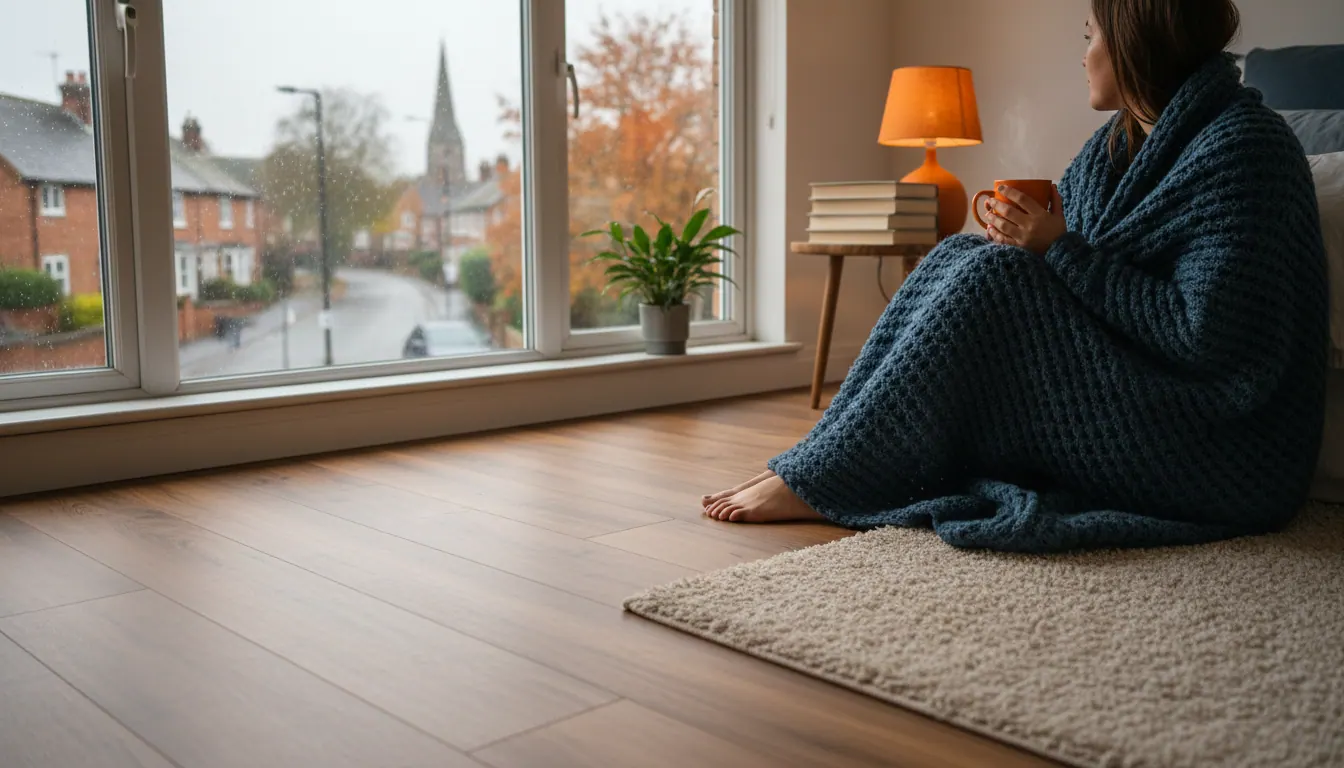
A living room floor takes a proper beating. Feet, furniture, pets, kids, the occasional dropped mug. If you are weighing up laminate flooring for your Derby living room, you are not alone. It is one of the most popular choices we fit across Derby and the surrounding area, and for good reason. Done right, it looks smart, cleans up quickly and holds up well to daily life.
This guide covers the real questions: whether laminate suits your home, what to watch out for, how it compares to carpet and LVT, and what good fitting actually involves. No hype, just straight answers.
Why laminate works well in Derby living rooms
Laminate flooring suits the kind of homes you find all over Derby. Victorian terraces, 1930s semis, post-war houses, modern new-builds. The format is versatile. A wood-effect plank in a warm mid-tone can make a traditional living room feel fresh without losing its character. A lighter, wider board can open up a smaller room and make it feel bigger.
The practical case is solid too. Laminate is harder-wearing than carpet in high-traffic areas, easier to sweep and vacuum, and much simpler to wipe clean after spills. If you have got children, a dog or both, that matters.
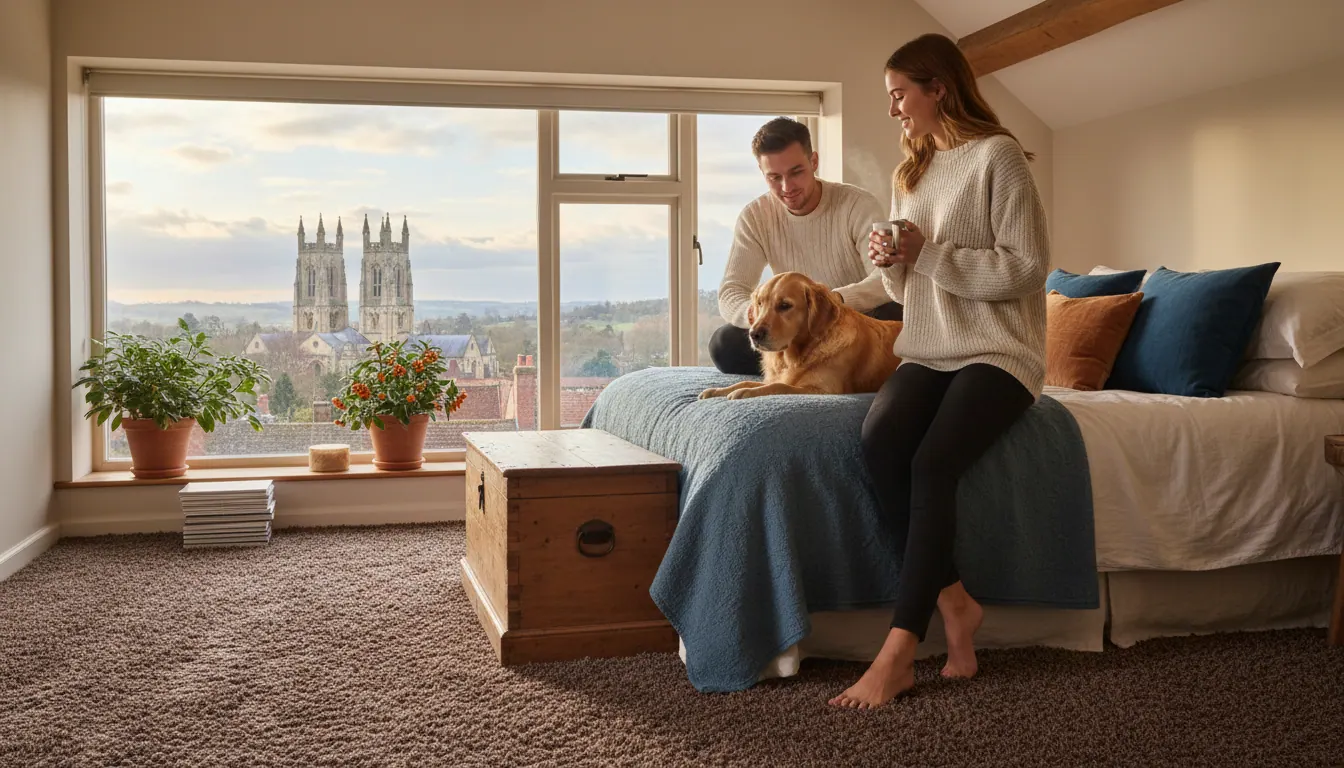
It also pairs well with a mixed-floor approach. We have fitted jobs where customers have gone for carpets upstairs and laminate downstairs, which is a very common combination in Derby family homes. The carpet keeps bedrooms warm and quiet, while the laminate handles the busy ground-floor traffic. If you are curious about how carpet holds up in the upstairs rooms, our article on carpet for stairs and hallways: durability and safety is worth a read.
Is laminate flooring still in fashion?
Honestly, yes. The product has come a long way from the thin, hollow-sounding boards that gave it a mixed reputation years ago. Modern laminate is thicker, more realistic in texture and far quieter underfoot. The better boards have embossed surfaces that mimic real timber grain convincingly, and the range of finishes available, from pale Scandi oak to rich walnut tones, means there is something to suit almost any interior.
The look that is popular right now in Derby living rooms leans towards longer, wider planks in natural, muted tones. It reads as contemporary without being cold. That said, the best choice is always the one that fits your home and your life, not whatever is trending.
What to think about before you choose
A few things are worth getting straight before you commit to a floor.
Subfloor condition. Laminate needs a clean, dry, level base. If your subfloor has dips, humps or soft spots, those need sorting first. A good fitter will flag this before a board goes down, not after.
Underlay. The right underlay makes a real difference to how laminate feels and sounds. A thin, inadequate underlay can make boards feel hollow and noisy. We will always advise on the right underlay for your room and subfloor type.
Moisture. Standard laminate does not cope well with sustained damp. In a living room this is rarely a problem, but if your ground floor has any history of damp or you are laying near patio doors, it is worth discussing. Waterproof laminate options exist and may be more appropriate in certain situations.
Expansion gaps. Laminate expands and contracts with temperature and humidity. Proper expansion gaps around the perimeter of the room, hidden under skirting or beading, are essential. Skipping this step is one of the most common reasons laminate floors start to buckle or lift at the edges.
Furniture and radiators. Heavy furniture on laminate is generally fine, but dragging it without protection can scratch the surface. Felt pads under legs are a simple fix.
Laminate vs carpet for a living room: which is right for you?
This is the question we get asked regularly. There is no single right answer, but here is how we think about it.
Choose laminate if:
- You want something easy to clean and maintain
- You have pets or young children who bring mess indoors
- You prefer a harder, more defined look
- You already have carpet elsewhere and want contrast on the ground floor
Choose carpet if:
- Warmth and softness underfoot matter most to you
- You have a quieter household and prefer the acoustic comfort carpet provides
- You want to add cosiness to a room that gets cold
Some customers go for a hybrid approach: laminate in the main living area and a soft rug over the top in the seating zone. It gives you the practical benefits of a hard floor with a bit of warmth where you actually sit. Worth considering.
If you are also thinking about other rooms, our article on LVT flooring for dining rooms: style, durability and easy cleaning covers another strong option for open-plan spaces.
What good fitting looks like
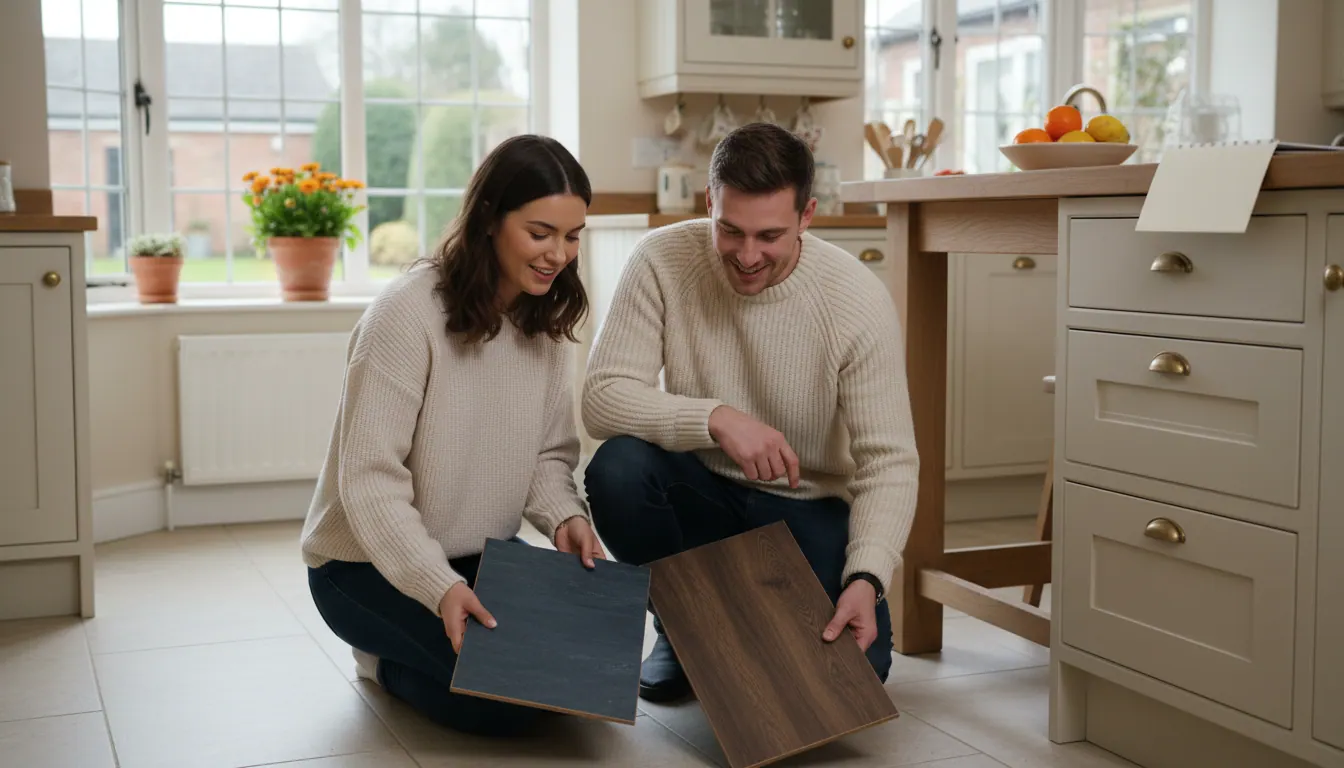
The difference between a laminate floor that lasts and one that causes headaches often comes down to the fitting, not the product. We take the time to get the prep right. That means checking the subfloor, acclimatising the boards before they go down, cutting accurately around doorframes and hearths, and finishing the edges neatly with the right beading or trim.
A well-fitted laminate floor should sit flat, feel solid underfoot, and have clean, tidy transitions at doorways and thresholds. If it creaks, bounces or has visible gaps, something has gone wrong in the fitting process.
Curtis visits every job personally, measures up properly and talks you through what will work best for your room. There are no surprises on the day.
What one of our customers said
Patricia had a laminate floor planned for her dining area and went through a process of changes before deciding on her final approach. Even though the job did not go ahead in the end, she wanted to share her experience:
Curtis was very helpful & visited several times bringing many samples. Because of complications I changed my plan & was unable to go ahead. I would certainly recommend him for his thorough support.
Patricia Brand
That flexibility and patience is just how we work. Choosing a new floor is a proper decision, and we would rather take the time to get it right than rush you into something that is not quite right for your home.
Is laminate a good idea on stairs?
This comes up fairly often. The honest answer is that laminate on stairs is possible but needs careful thought. Stairs are a safety-critical area. Laminate can be slippery, especially in socks, and the edges of stair nosings need to be finished with the right profile to reduce trip risk.
For most Derby homes, carpet remains the more practical and safer choice on stairs and landings, particularly in family homes with children or older residents. If you are set on a hard floor throughout, there are specialist stair-nosing solutions, but we would always discuss the specific setup with you before recommending it. Our guide on carpet for stairs and hallways: durability and safety goes into this in more detail.
Getting your room ready for a laminate fitting
Good preparation makes fitting day go smoothly. Here is what helps:
- Clear the room of furniture and any loose items before we arrive
- Remove old flooring if possible, or let us know if it is still in place
- Make sure the subfloor is swept clean and dry
- Flag any areas where the floor feels soft, uneven or damp
If you want a more detailed checklist, our guide on getting your room ready for new carpet or LVT covers the process thoroughly, and most of it applies equally well to laminate.
Frequently asked questions
Is laminate flooring still a popular choice for living rooms in Derby? Very much so. Modern laminate is a significant step up from older versions. Thicker boards, realistic wood textures and quieter underfoot performance make it a practical and good-looking choice for living rooms across Derby and the surrounding area. It works particularly well in family homes where easy cleaning matters.
What is the best way to look after a laminate floor once it is fitted? Keep it swept or vacuumed regularly to stop grit and dirt scratching the surface. For mopping, use a barely damp mop rather than a soaking wet one. Standing water is the enemy of laminate. Avoid harsh cleaning products and use felt pads under furniture legs to prevent scratches.
Can I put laminate flooring in a living room that gets a lot of sunlight? Direct, sustained sunlight can cause some laminate floors to fade over time. If your living room has large south-facing windows, it is worth discussing this with us so we can point you towards boards with better UV resistance, or consider whether LVT might be a more suitable option for that room.
How do I know if my subfloor is ready for laminate? The key checks are that it is dry, reasonably level and structurally sound. If you are unsure, we can assess it when we come to measure up. Sorting any subfloor issues before fitting day saves time and avoids problems down the line.
Ready to look at laminate flooring for your Derby home?
If you are thinking about laminate flooring for your living room, or anywhere else in your home, we are happy to come and have a look. We cover Derby and the surrounding area, and we will give you straightforward advice on what will work best for your space.
Call us on 07306 114151 or drop us a message through the contact form on our website. No pressure, just a proper conversation about your floor.